Louisville is one of the worst cities in the country for seasonal allergies. That’s not hyperbole — the Ohio River Valley traps pollen, the humidity keeps it suspended, and we get hit with three distinct allergy seasons back to back: tree pollen in spring, grass pollen in summer, and ragweed from August through October. Some years there’s barely a break between them.
As a physician living in this area, I’ve watched patients cycle through the same frustrating routine every season: antihistamines that cause drowsiness, decongestants that disrupt sleep, nasal steroid sprays that take weeks to kick in. These tools work, and I’m not suggesting you abandon them. But if you’re looking for something to layer on top — something that addresses the underlying airway inflammation rather than just blocking the histamine response — salt therapy is worth understanding.
What’s actually happening in your airways during allergy season
When pollen enters your nasal passages, your immune system treats it as a threat. It releases histamine, which triggers inflammation — your nasal lining swells, mucus production increases, and your airways narrow. That’s the congestion, sneezing, and pressure you feel.
The problem compounds over the course of a season. Inflammation builds on itself. Mucus traps more allergens, which triggers more inflammation, which produces more mucus. By mid-September, many Louisville allergy sufferers are dealing with congestion that no single antihistamine dose can fully resolve because the inflammatory buildup has accumulated over weeks.
Salt therapy interrupts that cycle at the source.
How a salt room session helps
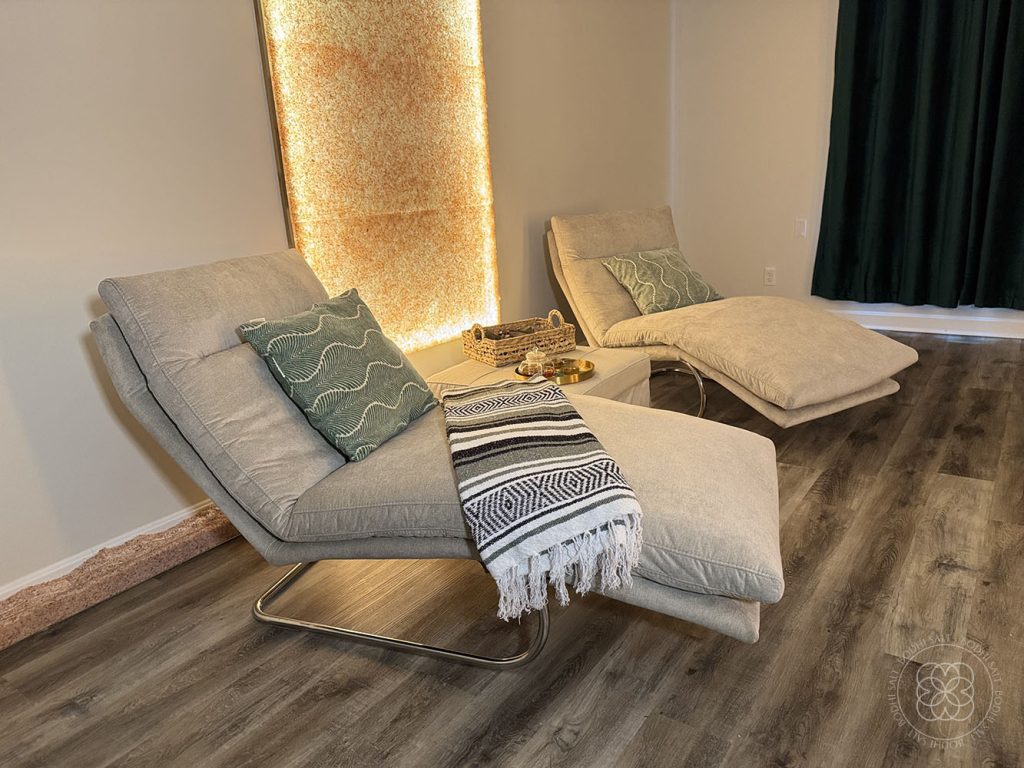
During 45 minutes in our salt room at Bodhi Salt Center, a halogenerator disperses pharmaceutical-grade sodium chloride into microscopic particles (1-5 microns). You inhale them naturally — no special technique required. Three things happen that directly address allergy symptoms:
Mucus clears. Salt is mucolytic — it thins the thick mucus that’s been trapping pollen in your airways. In the hours after a session, your body expels that loosened mucus along with the allergens caught in it. This is why many guests feel noticeably clearer within 24 hours of their first session.
Inflammation comes down. The anti-inflammatory properties of inhaled salt particles reduce the swelling in your nasal passages, sinuses, and bronchial tubes. Less swelling means easier airflow and less of that suffocating pressure behind your face that defines allergy season.
Bacteria get cleared out. Congested, inflamed airways are breeding grounds for secondary bacterial infections — sinusitis, ear infections, bronchitis. Salt is antimicrobial. Regular sessions reduce the bacterial load in your respiratory tract, cutting the risk of those infections that turn a bad allergy week into a course of antibiotics.
The timing strategy that makes the biggest difference
Most people come in for salt therapy after their symptoms are already bad. That works — you’ll get relief. But the approach that produces the best results is starting before peak season hits.
Preventive phase (2-4 weeks before your worst season): One to two sessions per week. This brings baseline inflammation down and gives your respiratory system a head start. For ragweed sufferers in Louisville, that means starting in late July or early August.
Active season (symptoms present): Two to three sessions per week. This is the intensive phase where you’re actively fighting the inflammatory buildup. Most guests feel significant improvement within the first week at this frequency.
Maintenance (as symptoms ease): Drop back to weekly sessions through the end of the season. Continue until a week or two after the first hard frost, when ragweed pollen finally drops.
For a complete breakdown of session frequency by condition, see our detailed guide to how many sessions you need.
Kids and seasonal allergies
Children are often hit harder by allergy season because their airways are smaller and their immune systems more reactive. Our dedicated Kids’ Salt Room provides the same therapeutic salt air in a supervised environment with storytime, crafts, and play. Kids don’t need to sit still or breathe any special way — the salt does its work while they have fun.
Louisville parents who bring their kids weekly during allergy season consistently report fewer sick days and less reliance on daily antihistamines. For families tired of medicating through every season, it’s a meaningful complement.
What salt therapy won’t do
It won’t eliminate your allergies. If you’re genetically sensitized to ragweed, your immune system will still react to it. What salt therapy does is reduce the severity of that reaction by keeping your airways cleaner, less inflamed, and better equipped to handle the pollen load.
Some guests find they can reduce their antihistamine use during seasons when they’re doing regular salt sessions. Others still take their medication but notice it works better when their airways aren’t already packed with inflammatory buildup. Either outcome is a meaningful improvement in quality of life.
Ready to get ahead of allergy season?
Book a session at Bodhi Salt Center in St. Matthews (4802 Sherburn Lane, Louisville) or call (502) 252-1030. Start before your worst season hits — your future self will thank you.
About the Author
Dr. Anton Grankin is a physician and co-founder of Bodhi Salt Center in Louisville, KY. His medical background informs Bodhi’s evidence-based approach to seasonal allergy management, helping Louisville families navigate the Ohio River Valley’s challenging pollen seasons with natural, clinically informed strategies.